
Updated planning guide for 2026-2027
Tanzania Transport Costs Explained: Complete Guide 2026-2027
Planning a trip to Tanzania? This comprehensive guide breaks down Tanzania transport costs, covering safaris, Kilimanjaro, Zanzibar, and more. Get expert advice for your 2026-2027 adventure.
WhatsApp +255616946642 | topguideadventures@gmail.com | info@topguideadventures.com
Understanding Tanzania Transport Costs: Your Complete Planning Guide
Tanzania, a land of iconic wildlife, breathtaking landscapes, and vibrant cultures, draws travelers from around the globe. From the vast plains of the Serengeti to the snow-capped peak of Kilimanjaro and the spice-scented beaches of Zanzibar, your journey will involve moving across this expansive East African nation. Understanding Tanzania transport costs is crucial for budgeting and planning an unforgettable adventure, especially as you look ahead to 2026 and 2027 travel.
This guide aims to demystify the various transportation methods available, their associated expenses, and how to make informed choices that align with your travel style and budget. We’ll cover everything from internal flights and private safari vehicles to public buses and ferry services, providing practical insights for a smooth and cost-effective experience.
Quick Overview of Tanzania Transport Costs
Tanzania transport costs vary significantly based on distance, mode of transport, and whether you opt for private or shared services. Private transfers and internal flights are the most expensive but offer convenience and speed. Public transport is the most budget-friendly but requires more time and flexibility. Safari vehicles, essential for wildlife viewing, represent a significant portion of safari package costs.
Table of Contents
- Quick Facts on Tanzania Transport
- Why Understanding Transport Costs Matters
- Key Modes of Transport in Tanzania
- Safari Transport Costs Explained
- Kilimanjaro Trek Transport Costs
- Zanzibar Transport Costs
- Intercity & Inter-Regional Transport
- Factors Influencing Tanzania Transport Costs
- Tips for Managing Tanzania Transport Costs
- Planning Your Transport for 2026-2027
- Booking Your Tanzania Transport
- Common Mistakes to Avoid
- Who is This Information For?
- Frequently Asked Questions (FAQs)
Quick Facts on Tanzania Transport
| Aspect | Details |
|---|---|
| Primary Airports | Julius Nyerere International Airport (DAR) in Dar es Salaam, Kilimanjaro International Airport (JRO) near Arusha. Abeid Amani Karume International Airport (ZNZ) in Zanzibar. |
| Main Transport Hubs | Arusha (safaris, Kilimanjaro), Dar es Salaam (coastal, southern circuit), Zanzibar (island travel). |
| Dominant Road Network | Main roads are generally paved, but secondary roads can be rough. Driving can be slow. |
| Public Transport Options | Dala-dalas (minibuses), Intercity Buses, Taxis, Tuk-tuks (in towns). |
| Private Transport Options | Safari vehicles (4×4), private cars with drivers, internal flights. |
| Rail Network | Limited passenger service, primarily the Tanzania Standard Gauge Railway (SGR) connecting Dar es Salaam to Mwanza. |
| Ferry Services | Crucial for Zanzibar travel (Dar-Zanzibar), and some lake transport. |
Why Understanding Tanzania Transport Costs Matters
Tanzania is a vast country. Getting from point A to point B often involves significant distances and varied terrain. The choices you make regarding transportation directly impact your budget, the time spent traveling, and your overall experience. High transport costs can quickly inflate your trip expenses, while inefficient choices can lead to lost time and frustration.
For instance, a safari in the Serengeti requires specific types of vehicles capable of handling park roads and providing good wildlife viewing. The cost of this vehicle, including fuel and a driver-guide, is a major component of your safari package. Similarly, reaching the starting point for a Kilimanjaro climb or hopping between islands in Zanzibar involves distinct transport considerations and associated costs.
A clear understanding of Tanzania transport costs allows you to:
- Budget Effectively: Allocate funds accurately for your travel segments.
- Choose Wisely: Select the most suitable transport for your needs (speed, comfort, cost).
- Avoid Surprises: Minimize unexpected expenses during your trip.
- Maximize Time: Plan routes and transfers to make the most of your limited vacation days.
- Enhance Experience: Opt for transport that complements your adventure, whether it’s a comfortable safari vehicle or a scenic ferry ride.
Key Modes of Transport in Tanzania
Tanzania offers a diverse range of transportation options, each with its own cost structure and suitability for different travel purposes.
1. Internal Flights
For covering long distances quickly, internal flights are the most efficient option. Major routes connect Arusha, Dar es Salaam, Zanzibar, and other key tourist hubs like Kilimanjaro (JRO) and Serengeti airstrips. Airlines like Precision Air, Coastal Aviation, and Auric Air operate these routes.
- Pros: Saves significant travel time, comfortable, offers aerial views.
- Cons: Most expensive option, baggage restrictions, requires booking in advance.
- Best For: Travelers with limited time, those connecting remote safari locations, or reaching Kilimanjaro/Zanzibar quickly from international arrival points.
2. Private Safari Vehicles
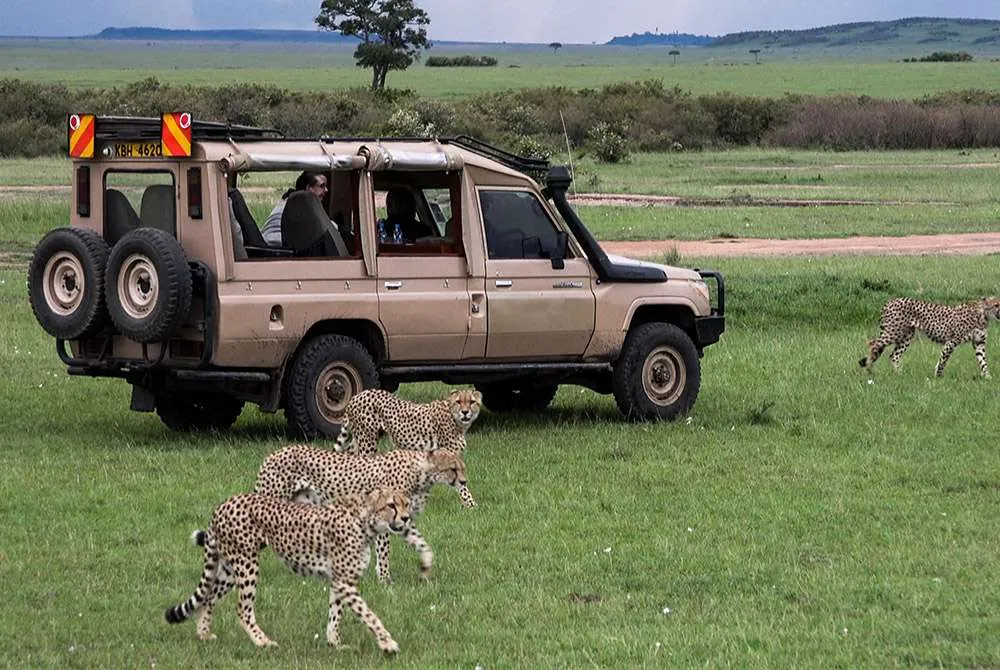
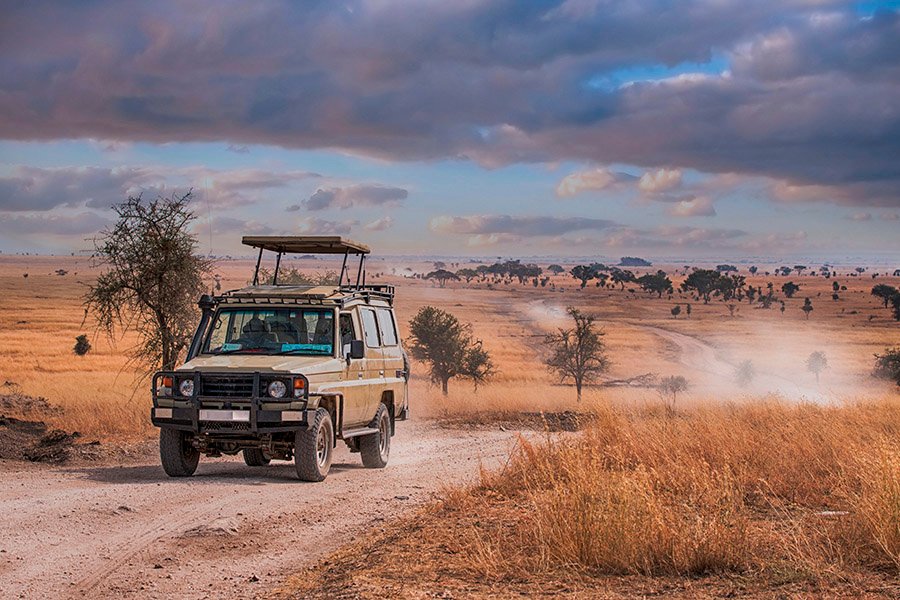
These are the backbone of any Tanzanian safari. Typically rugged 4×4 Land Cruisers or Land Rovers, they are equipped with pop-up roofs for game viewing. These are usually hired with a professional driver-guide for the duration of your safari.
- Pros: Essential for park terrain, excellent for wildlife viewing, comfortable for long drives, driver-guide provides expertise.
- Cons: A significant cost component of safari packages, exclusivity means higher price.
- Best For: All wildlife safaris in national parks like Serengeti, Ngorongoro, Tarangire, etc.
3. Public Buses (Intercity & Dala-dalas)
For budget travelers and those venturing between towns and cities, public buses are a common choice. Intercity buses connect major urban centers, while ‘dala-dalas’ (minibuses) serve local routes within towns and between nearby villages.
- Pros: Extremely affordable, offers a local experience, extensive network.
- Cons: Slow, can be crowded and uncomfortable, schedules can be erratic, not suitable for long distances with luggage, limited accessibility to remote areas.
- Best For: Short inter-town travel for budget-conscious backpackers, experiencing local life.
4. Private Cars with Drivers
Outside of safaris, you can hire private cars with drivers for intercity travel or day trips. This offers more comfort and flexibility than public transport but is less specialized than safari vehicles.
- Pros: More comfortable than public transport, flexible scheduling, door-to-door service.
- Cons: More expensive than public buses, driver availability can vary, not suitable for rough park roads.
- Best For: Transfers between towns, visiting attractions outside main routes, business travel.
5. Rail Transport
Tanzania’s rail network is developing, with the Standard Gauge Railway (SGR) being the most modern. It currently connects Dar es Salaam to Morogoro, Dodoma, and Mwanza. Passenger services are operational on certain segments.
- Pros: Potentially more comfortable and faster than buses on the same routes, scenic views.
- Cons: Limited network coverage, schedules can be infrequent, not as extensive as road transport for tourism.
- Best For: Specific intercity routes where SGR operates, offering an alternative to bus travel.
6. Ferry Services
The most prominent ferry route is between Dar es Salaam and Zanzibar, a vital link for many travelers. There are also ferries on Lake Victoria and other internal waterways.
- Pros: Essential for Zanzibar travel, can be cost-effective, offers sea views.
- Cons: Can be affected by weather, travel times can be long, comfort levels vary.
- Best For: Travel between mainland Tanzania (Dar es Salaam) and Zanzibar.
7. Taxis and Tuk-tuks
Within towns and cities like Arusha, Dar es Salaam, and Stone Town (Zanzibar), taxis and tuk-tuks are common for short-distance travel.
- Pros: Convenient for getting around urban areas, readily available.
- Cons: Costs can add up, need to agree on fare beforehand, traffic can cause delays.
- Best For: Local transport within towns and cities.
Safari Transport Costs Explained
Safari transport is often the single largest expense within a safari package, excluding park fees and accommodation. The cost is primarily driven by the vehicle type, fuel, driver-guide’s salary, and the duration of use.
Vehicle Types:
- Land Cruiser (4×4): The standard for most Tanzanian safaris. Known for durability and comfort on rough terrain. Typically seats 3-7 passengers comfortably for game viewing.
- Land Rover (4×4): Similar to Land Cruisers, often older models but still capable.
- Minibuses (2WD): Occasionally used for transfers to parks or on very well-maintained park roads, but generally not recommended for serious game viewing due to limited visibility and poor handling on rough tracks.
Cost Components:
- Vehicle Hire: The daily rate for the vehicle itself.
- Fuel: A significant ongoing cost, especially for long drives within large parks.
- Driver-Guide: Professional guides are highly skilled and essential for spotting wildlife and navigating. Their salary is part of the cost.
- Park Entry for Vehicle: Some parks charge a daily entry fee for the safari vehicle.
- Accommodation for Driver: If your safari involves overnight stays in the parks or remote areas, the tour operator covers the driver’s accommodation and meals.
Typical Pricing Structure:
Safari vehicle costs are usually bundled into the overall safari package price. However, to give you an idea, a typical 4×4 safari vehicle with a driver-guide costs approximately $250 – $450 USD per day. This cost is then divided among the passengers. For example, a 5-day safari might include the vehicle for 5 days, with costs ranging from $1250 to $2250 USD for the vehicle and driver over the entire trip, which is then factored into your per-person safari price.
Key Considerations for Safari Transport:
- Vehicle Comfort: Ensure the vehicle has ample legroom and a pop-up roof that allows for unobstructed viewing.
- Driver-Guide Expertise: A good driver-guide is as valuable as the vehicle itself. They know animal behavior, best viewing spots, and can share insights about the ecosystem.
- Group Size: The cost per person decreases with more people sharing the vehicle. A private safari for two will be more expensive per person than a safari for six in the same vehicle.
Kilimanjaro Trek Transport Costs
Transport is a smaller, but still essential, part of your Kilimanjaro trekking costs. The primary transport needs are getting to and from Kilimanjaro International Airport (JRO) and reaching the various park gates for your chosen route.
Main Transport Components:
- Airport Transfers: Transfer from JRO to your hotel in Moshi or Arusha, and the return trip. This is usually a private car transfer.
- Gate Transfers: Transport from your hotel to the specific national park gate where your trek begins (e.g., Marangu Gate, Machame Gate, Lemosho Gate).
- Return Gate Transfers: Transport from the park exit gate back to your hotel.
Estimated Costs:
- Airport Transfers (JRO to Moshi/Arusha): Expect to pay around $40 – $70 USD for a one-way private transfer.
- Gate Transfers: The cost varies significantly depending on the gate’s distance from Moshi or Arusha. Gates like Machame and Lemosho are further and require longer drives on rougher roads, costing more. A round trip to a closer gate might be $80 – $150 USD, while a trip to a more remote gate could be $150 – $250 USD or more.
Included in Trekking Packages:
Most reputable Kilimanjaro tour operators include these essential transfers in their trekking packages. Always confirm what is included. If not included, factor in approximately $150 – $300 USD per person for all necessary transfers for a standard trek.
Zanzibar Transport Costs
Zanzibar offers a variety of transport options for getting around the island, from the main ferry terminal to Stone Town and onward to beaches and attractions.
1. Ferry (Mainland to Zanzibar)
- Route: Dar es Salaam to Zanzibar (Stone Town) and vice versa.
- Frequency: Multiple departures daily.
- Travel Time: Approximately 1.5 to 2 hours.
- Cost: Varies based on ferry company and class (e.g., Standard, VIP). Expect prices in the range of $30 – $50 USD per person for a one-way ticket. Booking in advance is recommended, especially during peak season.
2. Airport Transfers (ZNZ)
- Route: Zanzibar Airport (ZNZ) to hotels in Stone Town or beach resorts.
- Cost: Pre-booked transfers are recommended for convenience and fixed pricing. Expect $20 – $50 USD for Stone Town and $40 – $80 USD for beach resorts, depending on distance. Taxis are available but agree on the fare beforehand.
3. Taxis and Private Transfers (On Island)
- Use: For transfers between Stone Town and beach resorts, or for day trips to attractions like Jozani Forest or spice farms.
- Cost: Negotiate fares. A typical transfer from Stone Town to a northern beach resort (e.g., Nungwi) might cost $40 – $60 USD. Day hire with a driver for a few hours can range from $50 – $100 USD, depending on the itinerary.
4. Dala-dalas (Local Minibuses)
- Use: The cheapest way to travel between villages and towns on the island.
- Cost: Very low, often less than $1 USD for short distances.
- Experience: Authentic, crowded, slow, and can be challenging with luggage.
5. Tuk-tuks
- Use: Primarily for short distances within Stone Town or small villages.
- Cost: Negotiable, generally more expensive than dala-dalas but cheaper than taxis for short hops.
6. Scooter/Motorbike Rental
- Use: For independent exploration, especially around beach areas.
- Cost: Around $10 – $20 USD per day.
- Caution: Requires a valid international driving permit and experience with motorbike riding. Roads can be unpredictable.
7. Bicycle Rental
- Use: For exploring Stone Town or short distances around beach resorts.
- Cost: Very affordable, $5 – $10 USD per day.
Intercity & Inter-Regional Transport
Beyond the main tourist circuits, moving between major towns and regions in Tanzania requires careful planning and understanding of the available options.
1. Intercity Buses
These are the workhorses of Tanzanian travel for those not flying. Companies like Scandinavia, Abood, and Dar Express operate routes between major cities such as Dar es Salaam, Arusha, Dodoma, Mbeya, and Mwanza.
- Pros: Most economical way to travel long distances overland.
- Cons: Very long travel times (e.g., Dar to Arusha can be 8-10 hours), roads can be bumpy, buses can be crowded, luggage storage can be an issue, comfort is basic.
- Cost: Expect $20 – $40 USD for intercity routes.
2. Standard Gauge Railway (SGR)
The SGR offers a modern alternative on its operational routes. The ‘Usafiri wa Reli’ train provides different classes of travel.
- Pros: More comfortable and potentially faster than buses on specific routes, modern facilities.
- Cons: Network is still expanding, schedules can be limited, requires getting to and from stations.
- Cost: Competitive with bus prices, sometimes slightly higher for premium classes.
3. Shared Taxis / Shuttle Services
In some areas, particularly between Arusha and Moshi, or Arusha and Nairobi (Kenya), shared shuttle services operate. These are typically minivans.
- Pros: Faster and more comfortable than buses, door-to-door service often available.
- Cons: More expensive than buses, schedules can be fixed, less flexibility.
- Cost: Varies, but expect $25 – $50 USD for routes like Arusha-Moshi.
4. Domestic Flights
As mentioned earlier, flights are the quickest way to cover vast distances between major hubs like Dar es Salaam, Arusha, Kilimanjaro, and Zanzibar. They are the most expensive but often necessary for optimizing short itineraries.
- Cost: Varies widely based on route, airline, and booking time. Expect $100 – $300 USD per person for one-way flights between major cities.
Factors Influencing Tanzania Transport Costs
Several elements will influence the final cost of your transportation in Tanzania:
- Mode of Transport: Internal flights are the most expensive, followed by private vehicles, then public buses/ferries.
- Distance: Longer journeys naturally incur higher costs, whether it’s fuel for a safari vehicle or a bus ticket.
- Private vs. Shared: Opting for private transport (e.g., private car, private safari vehicle) is always more expensive per person than sharing with others.
- Time of Year: During peak tourist seasons (June-October, December-February), demand for transport, especially flights and safari vehicles, can increase prices.
- Booking in Advance: Booking internal flights and ferry tickets well in advance often secures better prices. Safari vehicle bookings are usually part of a package and depend on operator pricing.
- Vehicle Type & Condition: Newer, more comfortable, or specialized vehicles (like 4×4 safari jeeps) cost more to operate and hire.
- Driver/Guide Services: For private hires, the cost of a professional driver-guide is a significant factor.
- Fuel Prices: Fluctuations in global oil prices can impact the cost of fuel, affecting vehicle hire rates.
- Road Conditions: Poor road conditions can increase wear and tear on vehicles, potentially leading to higher maintenance costs passed on by operators.
Tips for Managing Tanzania Transport Costs
Managing transport expenses is key to a more affordable Tanzanian adventure. Here are some practical tips:
- Prioritize: Decide which journeys are essential for speed and comfort (e.g., international flights, Kilimanjaro airport transfers) and which can be done more affordably (e.g., intercity buses for non-urgent travel).
- Combine Transport with Accommodation/Tours: Many tour operators include airport transfers and safari transport in their packages. This can simplify logistics and sometimes offer better value than booking separately.
- Travel in Groups: Sharing the cost of private vehicles, taxis, and safari vehicles significantly reduces the per-person expense.
- Book Flights Early: For internal flights, especially during peak seasons, booking several months in advance can lead to substantial savings.
- Consider Bus Travel for Specific Routes: If you have ample time and want to save money, intercity buses are a viable option for connecting major towns.
- Negotiate Fares: For taxis and tuk-tuks, always agree on the fare before starting your journey.
- Be Realistic About Time: Public transport is slow. Factor in extra travel time and potential delays when planning your itinerary.
- Utilize Local Transport for Short Distances: Within towns, dala-dalas or tuk-tuks are much cheaper than taxis for short hops.
- Pack Light for Flights: Internal flights often have stricter baggage allowances, and excess baggage fees can add up.
Planning Your Transport for 2026-2027
As you plan your Tanzanian adventure for 2026 or 2027, here are some specific considerations for transport:
- Book Key Elements Early: Especially for peak seasons (June-October 2026, December-February 2027), internal flights, ferry tickets, and safari vehicle availability should be secured as early as possible. Many operators release their 2026-2027 pricing and availability by mid-2025.
- Research SGR Expansion: Keep an eye on the progress of the Standard Gauge Railway. Its expansion could open up new, more comfortable overland travel options for future trips.
- Consider Hybrid Approaches: Don’t feel locked into one mode of transport. For example, fly into Kilimanjaro (JRO), take a private transfer to Arusha, do a safari using a private 4×4, then take a bus to Moshi for a Kilimanjaro trek, and finally fly from JRO to Zanzibar. This balances cost, time, and experience.
- Factor in Rising Costs: While we don’t invent exact prices, it’s prudent to anticipate potential increases in fuel costs and general inflation affecting travel expenses for 2026-2027. Budget slightly more than current estimates.
- Driver-Guides: For safaris, ensure your chosen operator uses experienced, English-speaking driver-guides. Their knowledge is invaluable and contributes significantly to the safari experience, making the cost worthwhile.
- Zanzibar Logistics: If combining mainland safari with Zanzibar, pre-book your ferry or flight to avoid last-minute rushes and potential price hikes.
Booking Your Tanzania Transport
Booking transport in Tanzania requires a mix of direct booking, package inclusion, and careful negotiation.
Safari Transport:
- This is almost always booked as part of a safari package. Your tour operator handles the vehicle, driver-guide, fuel, and park logistics.
- Advice: Choose a reputable operator. Inquire about the type of vehicle used, the experience of the driver-guides, and what is included (e.g., fuel, driver’s accommodation).
Kilimanjaro Transport:
- Airport and gate transfers are typically included in trekking packages.
- Advice: Confirm these transfers are included when getting quotes. If not, ask your operator for a quote or arrange them separately with a reliable local transport provider.
Internal Flights:
- Book directly with airlines (Precision Air, Coastal Aviation, Auric Air) or through online travel agencies.
- Advice: Book well in advance for better rates. Be aware of baggage allowances.
Ferries (Dar-Zanzibar):
- Can be booked online in advance or at the ferry terminal in Dar es Salaam.
- Advice: Several companies operate. Research reviews and book with a reputable one. VIP classes offer more comfort.
Intercity Buses:
- Tickets can usually be purchased at bus stations on the day of travel or a day before. Some companies may offer online booking or agent bookings.
- Advice: Arrive early to secure good seats and ensure your luggage is loaded correctly.
Taxis & Private Hire:
- These are best arranged through your hotel, tour operator, or reputable local contacts.
- Advice: Always agree on the fare and destination before starting the journey. For longer hires or day trips, clarify what the price includes (e.g., waiting time, mileage).
Contact Us for Seamless Transport Planning:
Navigating the transport options in Tanzania can seem complex, but with expert guidance, it becomes manageable. At Best Tanzania Tour Operator, we specialize in crafting itineraries that seamlessly integrate all your transport needs, ensuring comfort, efficiency, and value for your 2026-2027 travels. Whether it’s arranging reliable safari vehicles, coordinating airport transfers, or advising on the best intercity routes, we handle the details so you can focus on your adventure.
Get in touch to discuss your Tanzania transport requirements:
- WhatsApp: +255616946642
- Email: topguideadventures@gmail.com
- Backup Email: info@topguideadventures.com
Common Mistakes to Avoid
When planning and booking transport in Tanzania, travelers often make a few common errors:
- Underestimating Travel Times: Tanzania is large, and road travel is often slower than expected due to road conditions and traffic. Assuming you can cover vast distances quickly by road is a frequent mistake.
- Not Agreeing on Fares: For taxis, tuk-tuks, and informal hires, failing to agree on a price before the journey begins almost always leads to overpayment.
- Booking the Cheapest Option Without Research: The absolute cheapest bus or ferry might be uncomfortable, unreliable, or unsafe. It’s essential to balance cost with reputation and comfort.
- Ignoring Luggage Restrictions: Especially for internal flights and crowded public transport, bringing excessive luggage can cause problems and incur extra fees.
- Relying Solely on Public Transport for Safaris: Public buses cannot access national parks. You need specialized safari vehicles. Trying to piece together public transport to reach park gates is impractical and time-consuming.
- Not Confirming Inclusions: Assuming airport transfers or gate transfers are included in tour packages without explicit confirmation can lead to unexpected costs.
- Over-reliance on GPS: While useful, GPS signals can be unreliable in remote areas, and road networks may not always be accurately mapped. Driver-guides are essential for navigation.
- Last-Minute Bookings: For internal flights and popular ferry routes, booking just days before travel can mean significantly higher prices or no availability.
Who is This Information For?
This comprehensive guide on Tanzania transport costs is designed for:
- First-time visitors to Tanzania: Providing a foundational understanding of the transport landscape.
- Budget travelers: Offering insights into cost-saving options like public transport and group travel.
- Mid-range travelers: Helping them balance comfort, time, and cost by understanding private hire and shuttle options.
- Luxury travelers: Informing them about the premium options available and what makes them worth the investment (e.g., private charter flights, high-end safari vehicles).
- Safari enthusiasts: Detailing the specifics of safari vehicle costs and their importance.
- Kilimanjaro trekkers: Clarifying the transport needed to reach the mountain.
- Zanzibar visitors: Explaining island-specific transport options.
- Travel planners: Offering detailed information for creating well-structured itineraries for 2026-2027.
Frequently Asked Questions (FAQs)
1. What is the most expensive way to travel around Tanzania?
The most expensive modes of transport in Tanzania are typically internal flights and private charter flights. For safaris, the daily hire of a dedicated 4×4 safari vehicle with a professional driver-guide is also a significant cost component.
2. What is the cheapest way to travel between major cities like Arusha and Dar es Salaam?
The cheapest way is by intercity public bus. These journeys can be long (8-10 hours) but are significantly more affordable than flying or private transfers. For 2026-2027 travel, expect these costs to remain the most budget-friendly option.
3. Are safari vehicles included in safari package prices?
Yes, the cost of the safari vehicle and a driver-guide is almost always a core component of a safari package price. It’s rarely an add-on, but the type of vehicle and level of service can influence the overall package cost.
4. How much should I budget for airport transfers in Tanzania?
Budget approximately $40 – $70 USD for transfers from Kilimanjaro International Airport (JRO) to Moshi/Arusha. For Zanzibar Airport (ZNZ), expect $20 – $50 USD to Stone Town and $40 – $80 USD to beach resorts. These are estimates for pre-booked private transfers.
5. Is it safe to use public transport in Tanzania?
Public transport like buses and dala-dalas is widely used by locals and is generally safe. However, travelers should exercise caution, especially with belongings, and be aware of road conditions and driving styles. For longer distances or when time is limited, private or shared shuttles might offer a more comfortable and secure experience.
6. Can I drive myself in Tanzania?
Self-driving is possible, especially for those with experience driving on the left side of the road and navigating varied road conditions. However, it is not recommended for most tourists, particularly for safaris where a knowledgeable driver-guide is essential for wildlife spotting and park navigation. Rental costs for a suitable 4×4 can be high, and insurance and roadworthiness are concerns. For 2026-2027, this remains a niche option.
7. How do I book the ferry from Dar es Salaam to Zanzibar?
You can book ferry tickets online through the ferry company websites or purchase them directly at the ferry terminal in Dar es Salaam. Booking a few days in advance is advisable, especially during peak travel periods.
8. What are the typical inclusions for transport in a Kilimanjaro trekking package?
Most reputable Kilimanjaro packages include round-trip airport transfers from JRO and transfers from your hotel to the national park gate and back upon completion of the trek. Always verify this with your tour operator.
9. Are there any train services for tourists in Tanzania?
While the Standard Gauge Railway (SGR) is developing, its passenger routes are still limited. It’s not yet a primary tourist transport option for most itineraries, but it can serve as an alternative for specific intercity routes like Dar es Salaam to Mwanza. Its role may expand by 2027.
10. How much should I budget for local transport within towns like Arusha or Stone Town?
For short distances, using local transport like dala-dalas or tuk-tuks is very cheap, often less than $1-2 USD. Taxis are more expensive, but for short rides within town, expect to pay $5 – $15 USD, depending on the distance and your negotiation skills.
Plan Your Tanzania Transport with Experts
Understanding Tanzania transport costs is a vital step in planning your dream African adventure. Whether you’re aiming for the wildlife-rich plains, the summit of Kilimanjaro, or the tropical beaches of Zanzibar, the right transportation choices will ensure a smooth, enjoyable, and memorable journey. By considering the various modes available, their associated expenses, and smart budgeting tips, you can create an itinerary that perfectly fits your needs and expectations for 2026-2027.
At Best Tanzania Tour Operator, we simplify the complexities of travel logistics. We offer expertly crafted safari packages, Kilimanjaro climbs, and Zanzibar holidays that include all necessary transport, ensuring you experience the best of Tanzania without the hassle of coordinating multiple bookings. Our team is dedicated to providing personalized service and ensuring your trip is as incredible as you imagine.
Ready to plan your Tanzania transport and adventure? Contact us today:
- WhatsApp: +255616946642
- Email: topguideadventures@gmail.com
- Backup Email: info@topguideadventures.com
Let us help you navigate Tanzania transport costs and create an unforgettable experience!
Is Nyerere Or Mikumi Cheaper From Zanzibar? Your Safari Cost Comparison
Comparing safari costs from Zanzibar to Nyerere National Park versus Mikumi National Park is crucial for budget-conscious travelers. Generally, Mikumi is more affordable due to its closer...
View package detailsNo related package matches those filters. Clear one or more filters to see the other topic-matched options.
Plan your Tanzania Transport Costs Explained with Top Guide Adventures
Tell us your travel dates, group size, comfort level, and dream experience. We will help you shape a clear, realistic, and memorable Tanzania itinerary.



